

Replacing Confusion With Clarity in Women’s Specialist Care.
NGynS helps women find the right gynecologic specialist, not just the nearest one. Built for VisionaryASC, which owns and runs surgery centers, it pairs Definitive Healthcare data with AI-enriched physician profiles and Maya, a chat guide that turns a visitor’s questions into a specialist search.
https://gojilabs.com/wp-content/uploads/2026/10/ngyns-hero-video.mp4
The Challenge
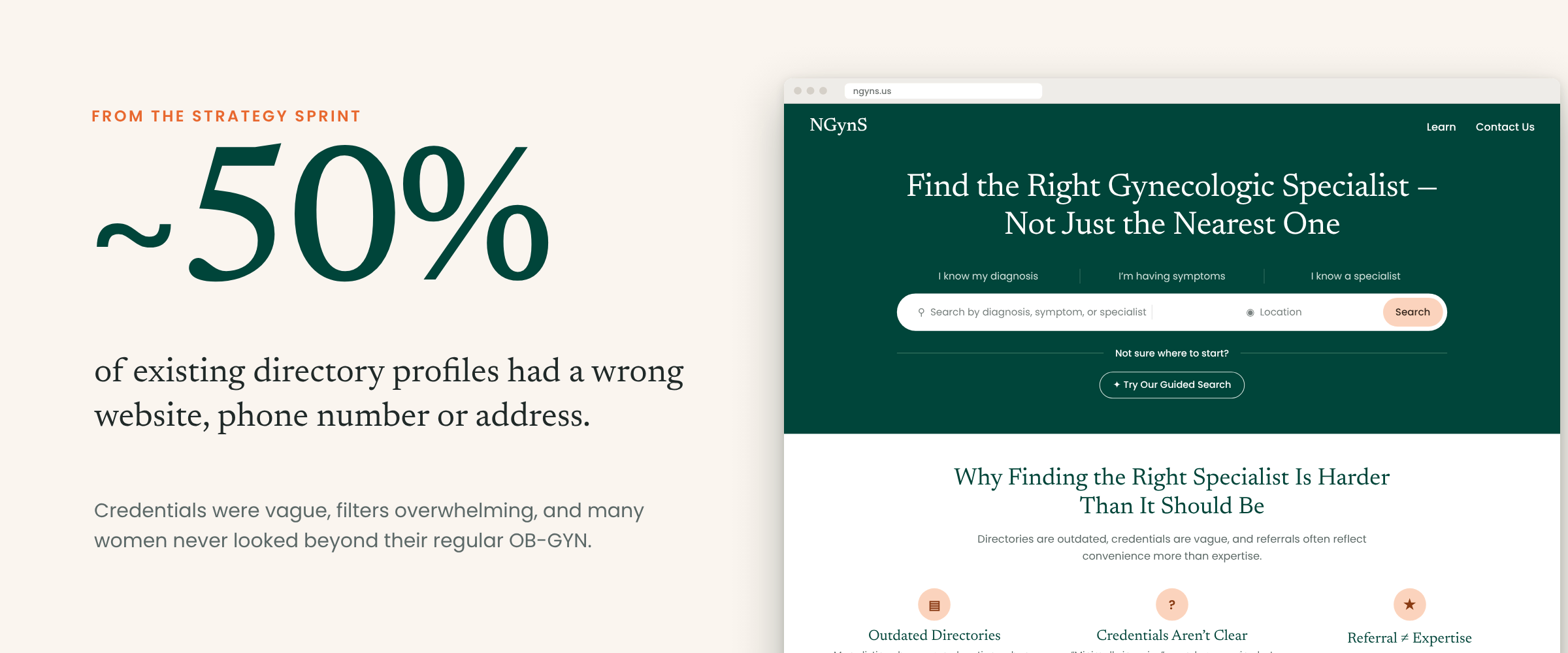
Finding a gynecologic surgeon means piecing together information from sources that disagree. In the strategy sprint, the team estimated that half of existing directory profiles had a wrong website, phone number or address. Credentials are vague: “minimally invasive” sounds reassuring but says nothing about fellowship training. Patients lose time cross-checking sites, some end up with expensive cash-only surgeons, and many never think to look beyond their regular OB-GYN.
VisionaryASC wanted a directory patients could trust, one that would connect them with the right specialists and its surgery centers. That meant profiles accurate enough to act on, for tens of thousands of physicians, from a data feed that goes stale every quarter. Writing them by hand wasn’t realistic. Letting an AI write them unchecked wasn’t acceptable: an invented fellowship or the wrong photo on a surgeon’s profile would break the one thing the product promised.
Our Approach
We started with a five-workshop strategy sprint with VisionaryASC’s team: competitors, demographics and the data layer, an empathy and current-journey map, personas, a North Star exercise, and feature-by-value prioritization. Two personas set the direction. “Knowledgeable Kylie” searches by condition name and reads credentials. “Clueless Carole” starts from symptoms, doesn’t know the terms, and wants to feel in good hands. The team agreed on one core value, “Replace confusion with clarity in women’s healthcare decisions,” and one North Star: appointments made with NGynS providers.
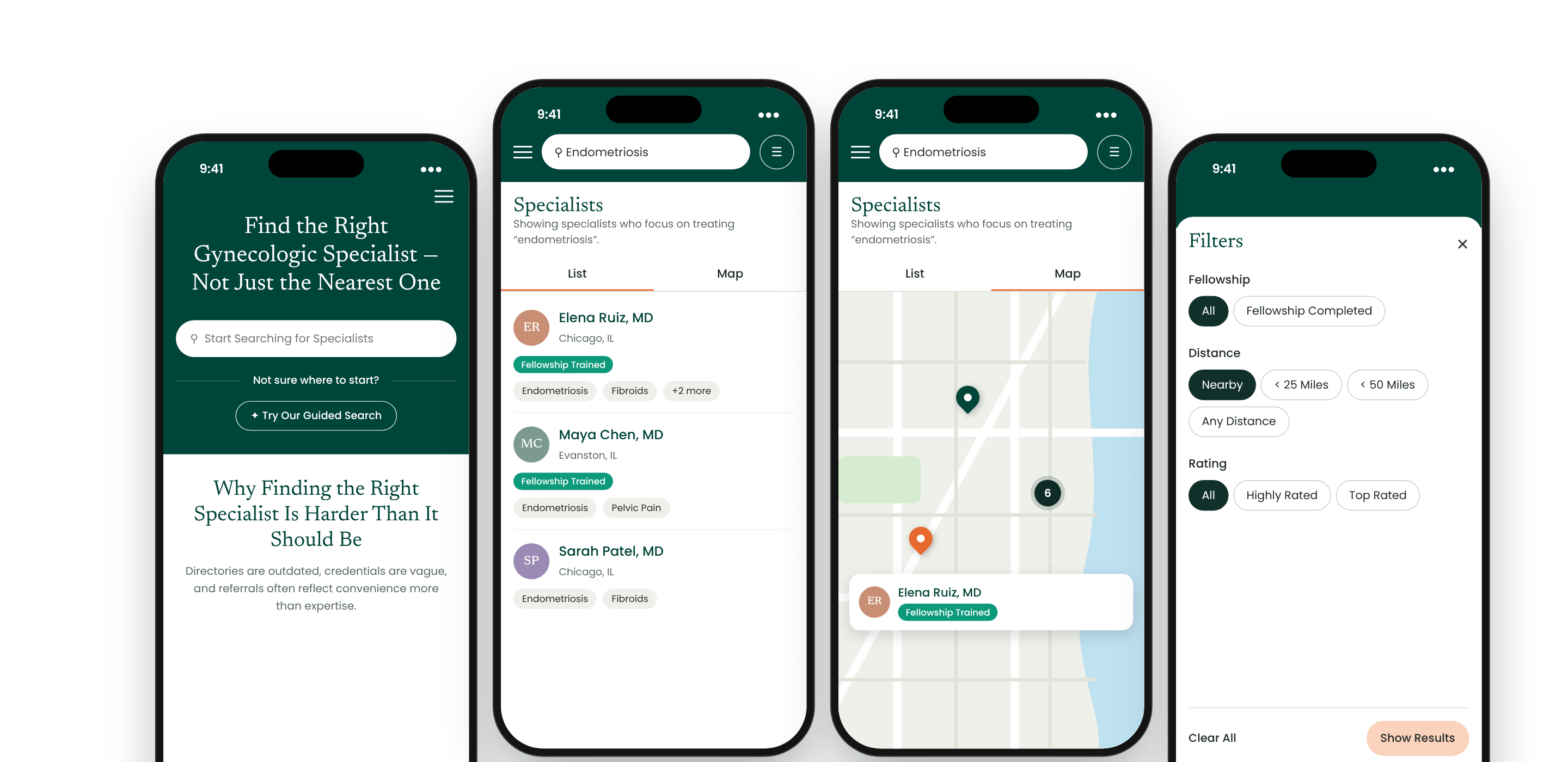
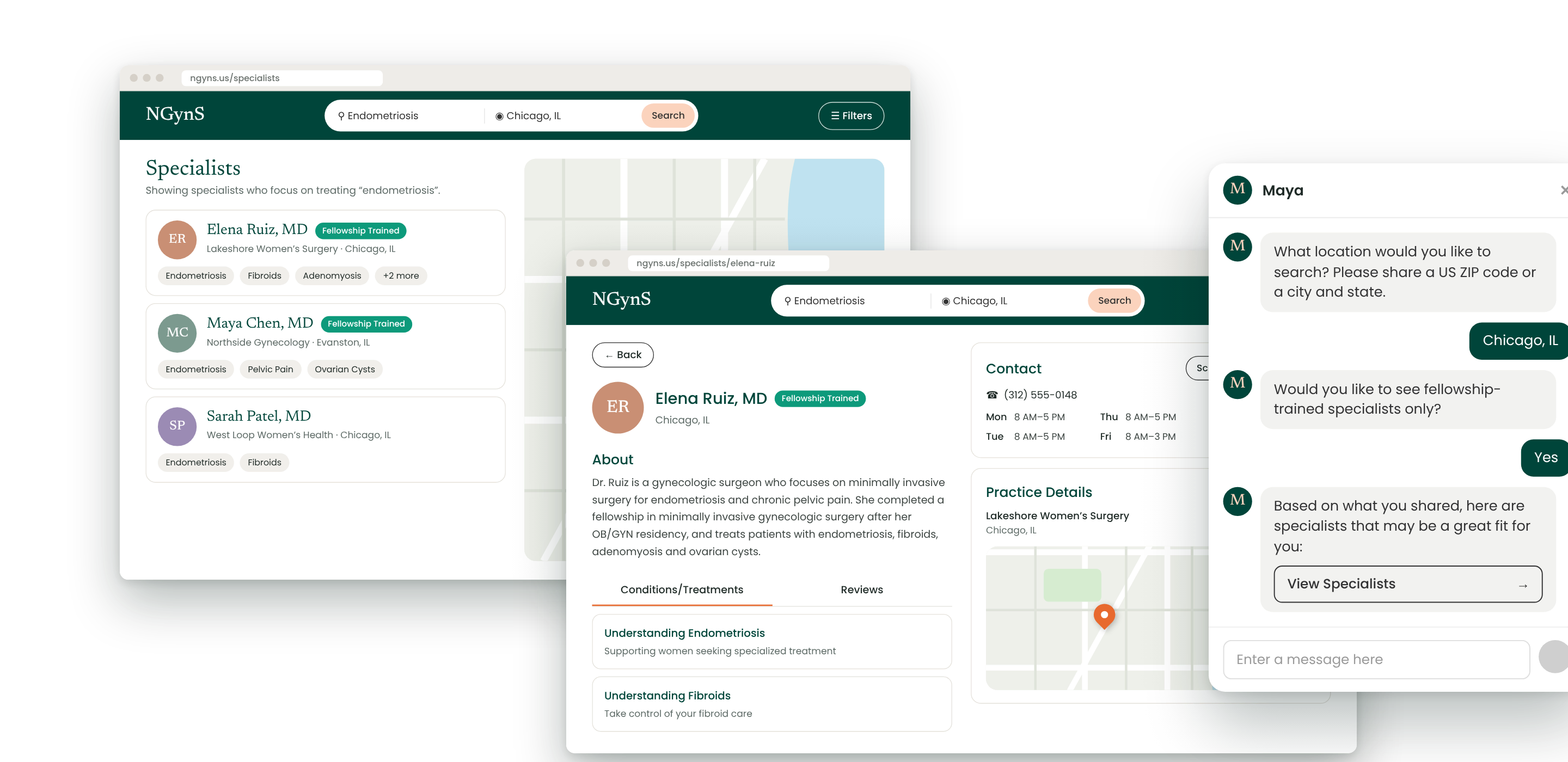
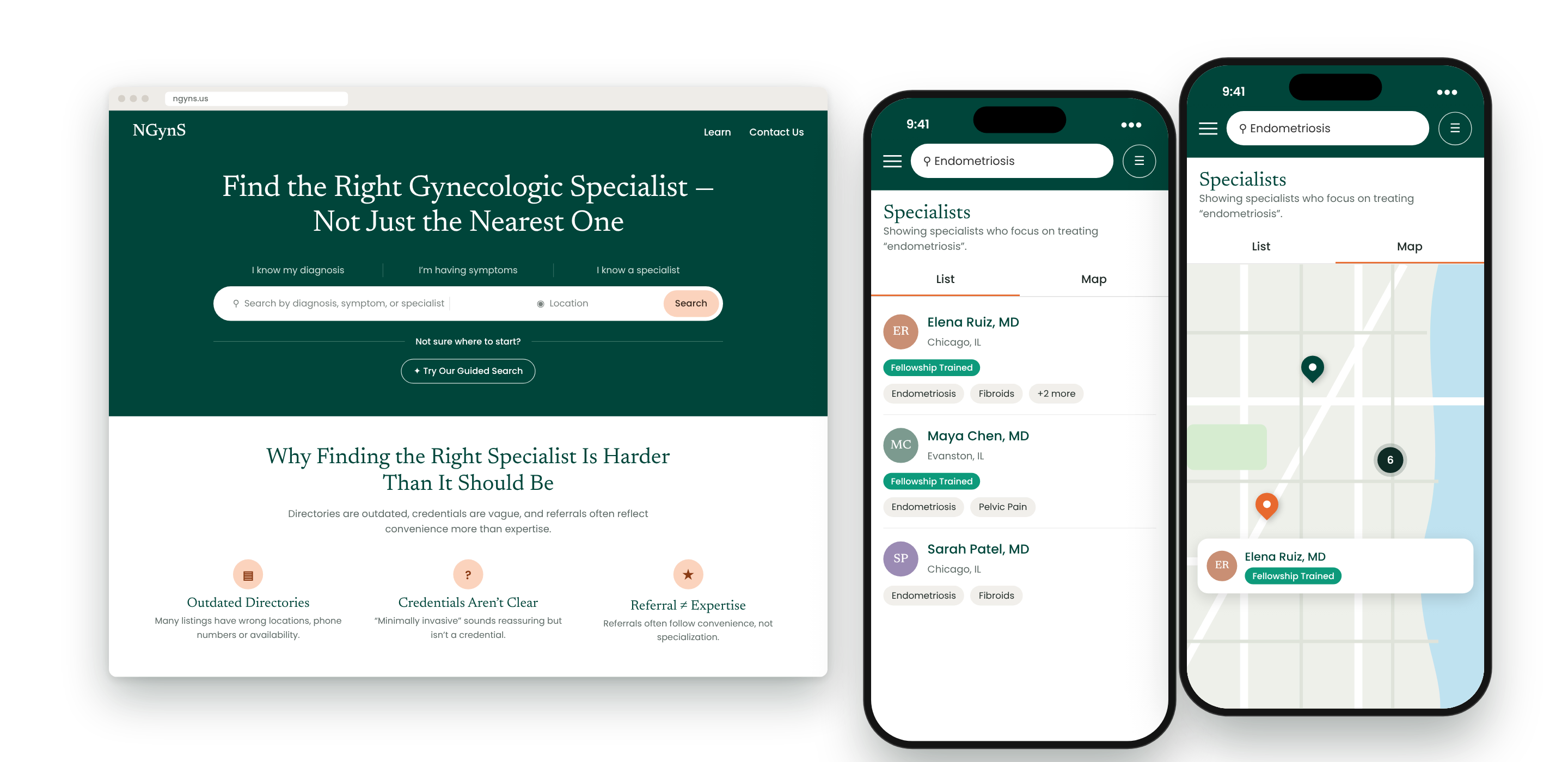
The design serves both personas. Search opens with three paths, “I know my diagnosis,” “I’m having symptoms” and “I know a specialist,” plus a Guided Specialist Match for anyone unsure where to start. Profiles lead with what patients told us matters: fellowship training, conditions treated, and a plain-language summary. Visitors who would rather talk it through can ask Maya, who asks a few questions and hands off to the same search.
Technical Architecture & Implementation
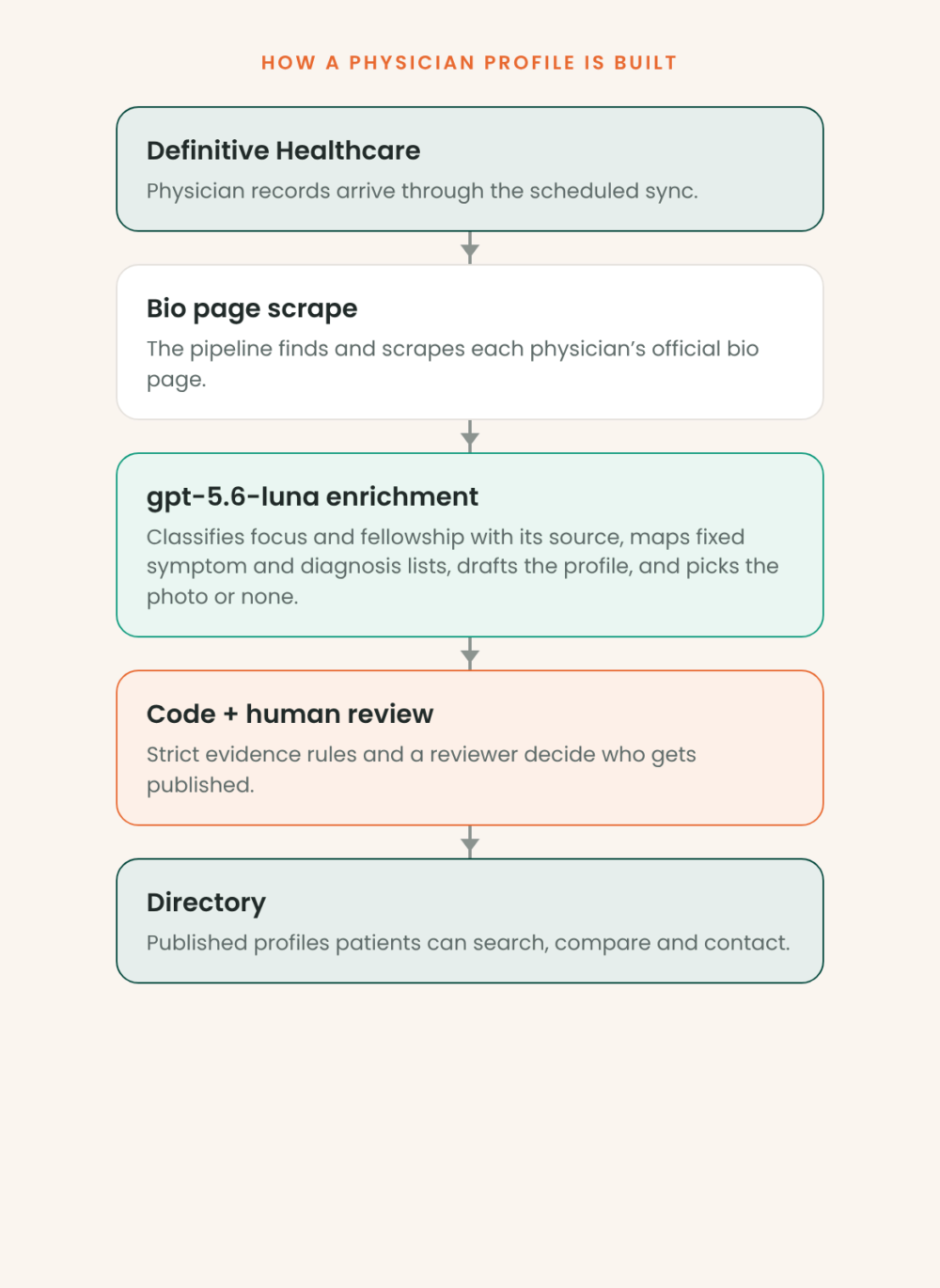
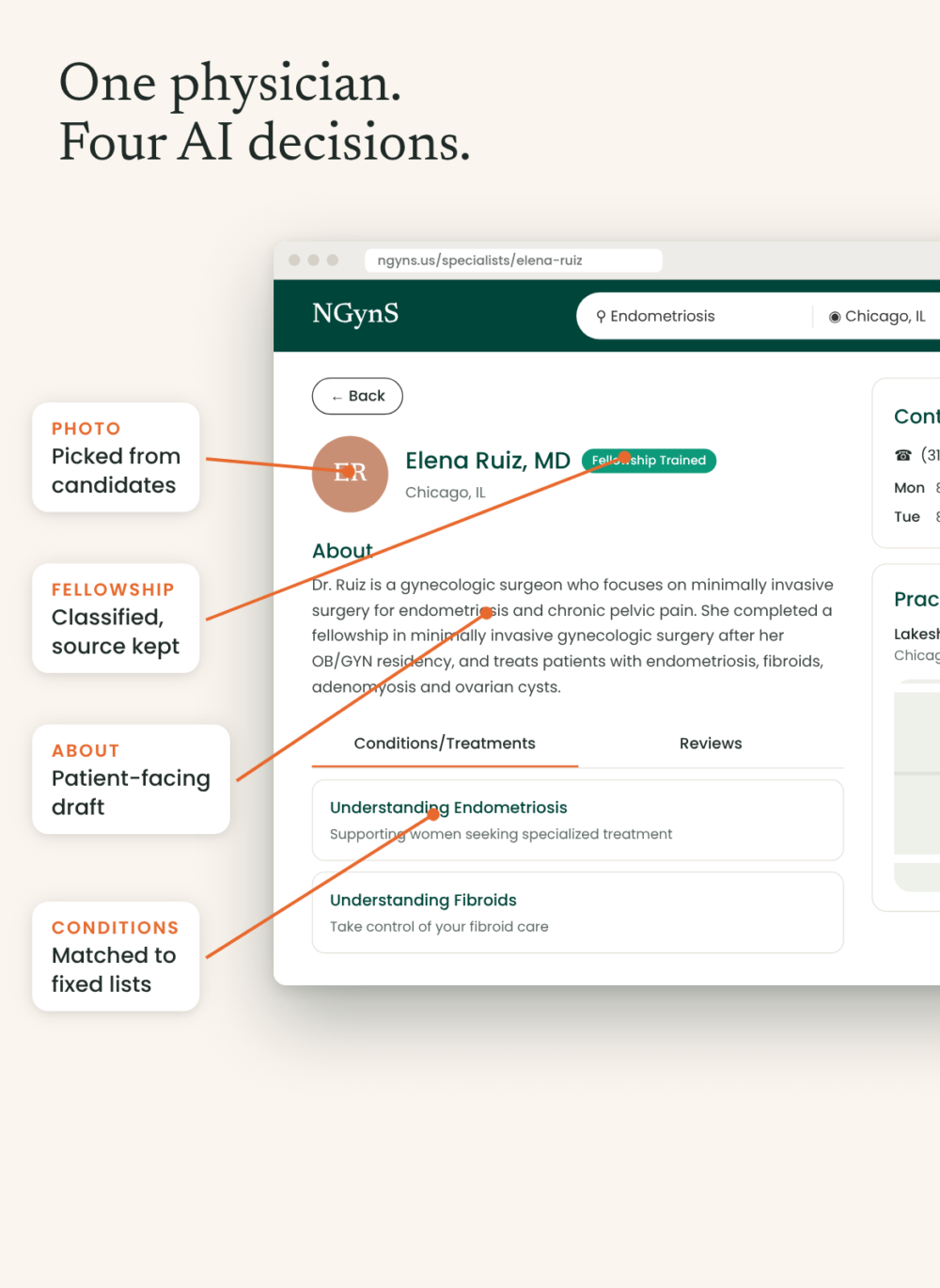
AI runs as a step inside the Definitive Healthcare sync in the Go backend. For each physician, the pipeline finds and scrapes the official bio page. The model then classifies practice focus and fellowship training, keeping the source that states it, maps the physician to NGynS’s fixed symptom and diagnosis lists, drafts the patient-facing description, and picks the avatar. Photo selection returns an index and a confidence, or “none of these” for logos, placeholders and photos of the wrong person, and an existing avatar is only replaced at high confidence. The rules are strict about evidence, and code plus a human review step decide who gets published.
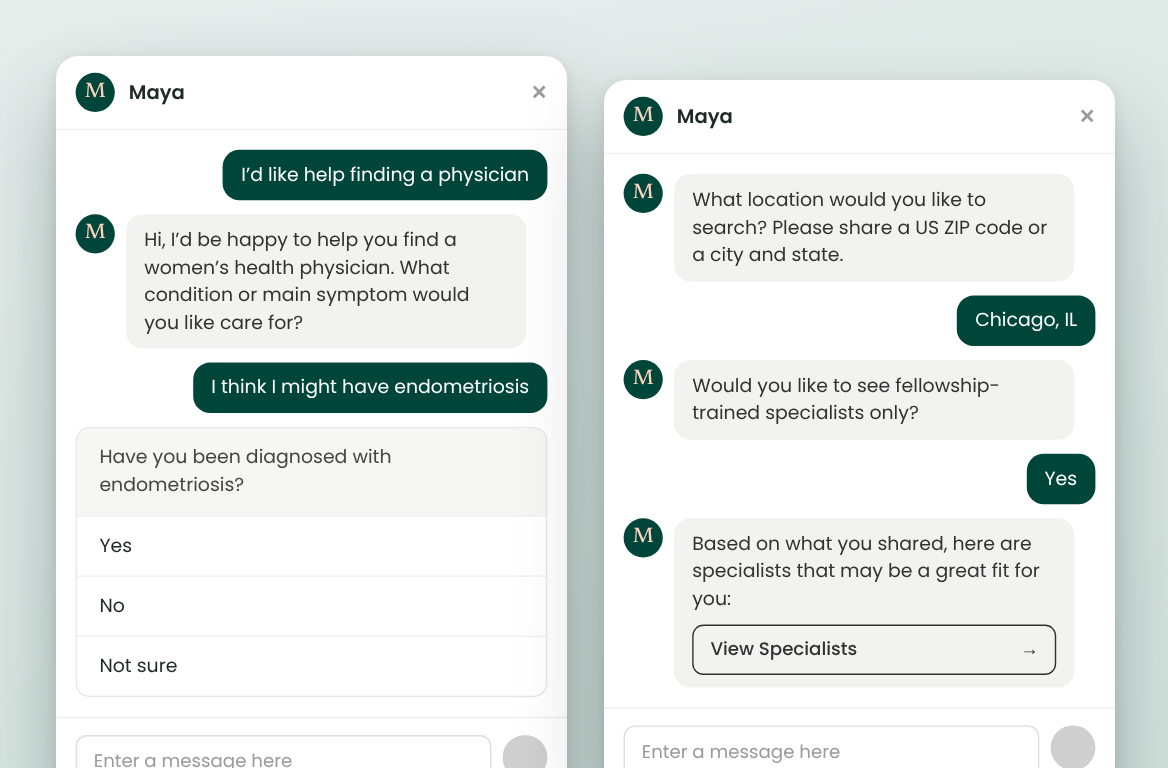
Maya runs on the same model, OpenAI’s gpt-5.6-luna. A public endpoint streams replies to the browser, and the full conversation is sent each turn, so no chat sessions are stored. Maya has two tools: one shows 2–5 tappable answers, the other proposes a search with condition and symptom names, a location and an optional fellowship filter. The backend matches those names against its own tables and geocodes the location through Google Places. It doesn’t trust coordinates from the model, and if geocoding fails it holds the search while Maya asks for a usable location. Maya never writes results, diagnoses or recommends medication.
The Impact
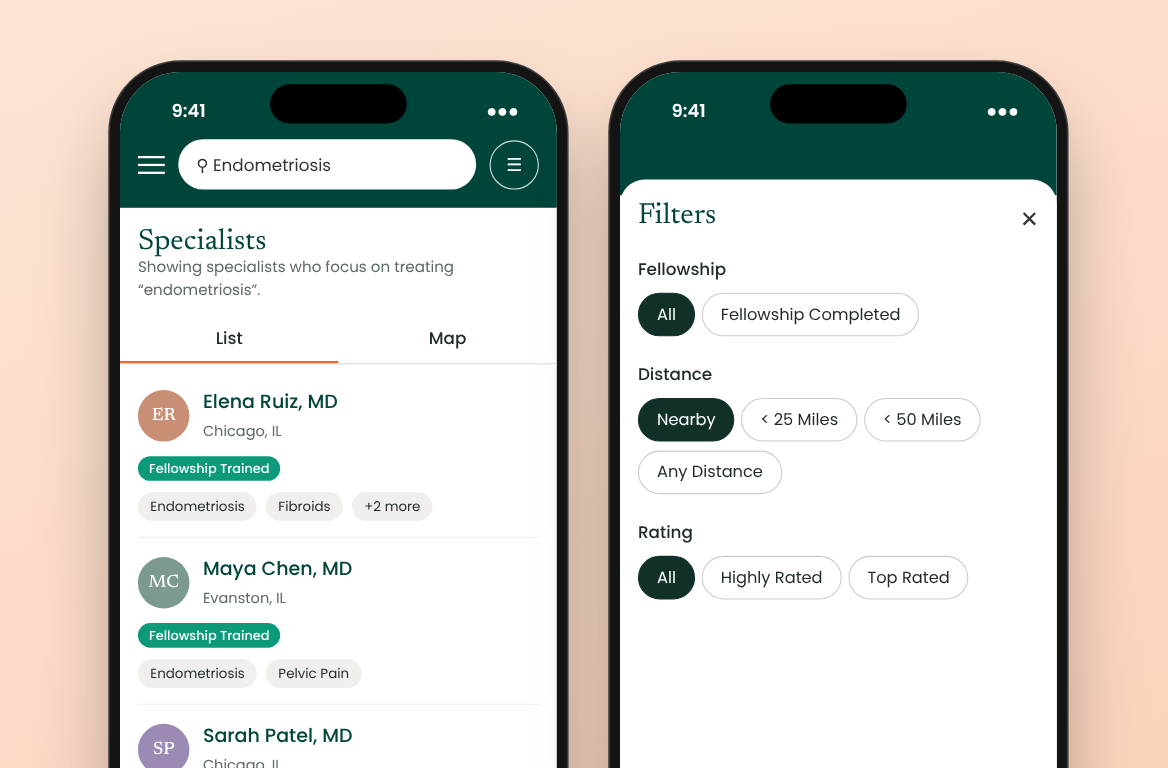
Patients get a directory built around expertise instead of proximity. A search for endometriosis in Chicago returns fellowship-trained specialists with plain-language profiles grounded in each physician’s own bio. A visitor who doesn’t know the right term can still get there, through Maya or the guided match.
For VisionaryASC, the enrichment pipeline turns a quarterly data feed into 40,000 usable profiles without a team writing bios by hand, while a person still makes the publishing call. The chat model is a configuration setting, and Mixpanel tracks widget opens, messages and specialist results, so the team can see where Maya helps.
- 40,000 physician profiles enriched from official bio pages
- Fellowship training classified, with the source that states it
- Physicians mapped to fixed symptom and diagnosis lists
- AI photo selection that rejects logos, placeholders and the wrong person
- Maya, a chat guide that hands off to the regular provider search
- Three search paths plus a Guided Specialist Match
Project Results
Physician Profiles Enriched
Each built from the physician’s official bio page and checked by code and human review before it’s published.
AI Decisions per Profile
Classification, condition matching, the written profile and the photo, each held to strict evidence rules.